
Catalyst Performance Evaluation
Assessment of activity, selectivity, stability, feed consumption, product quality and performance decline against reference conditions.
From advanced characterization to technical interpretation, Iran Catalyst connects rigorous laboratory work with confident industrial and research decisions.
From data to industrial decision: catalyst performance, troubleshooting, reformer monitoring, simulation, technology development and process intelligence in one integrated engineering workflow.
Assessment of activity, selectivity, stability, feed consumption, product quality and performance decline against reference conditions.
Root-cause investigation of coking, pressure-drop increase, temperature instability, conversion loss, energy penalties and shortened catalyst life.
Definition of catalyst quantity, layer sequence, active/semi-active grades, loading requirements and thermal-hydrodynamic bed behavior.
Analysis of temperature, pressure, flow, gas composition, laboratory and operating-event data to detect critical trends and deviations.
Evaluation of operating scenarios to increase conversion, reduce feed and energy consumption, stabilize quality and extend catalyst life.
Integration of laboratory results, process data and field evidence into an executive technical report, corrective actions and monitoring plan.
From technical specification and formulation to shaping, thermal treatment, pilot production, repeatability control, activation and industrial readiness.
Tube-skin temperature profiling, heat-load distribution, steam/oxidant-to-carbon review, carbon-risk analysis, catalyst grading and operating scenarios.
Mass and energy balances, pressure drop, heat transfer, equilibrium and catalyst behavior models for industrial scenario comparison.
Anomaly detection, incident reconstruction, performance forecasting and engineering knowledge integration across historian, laboratory and operational data.
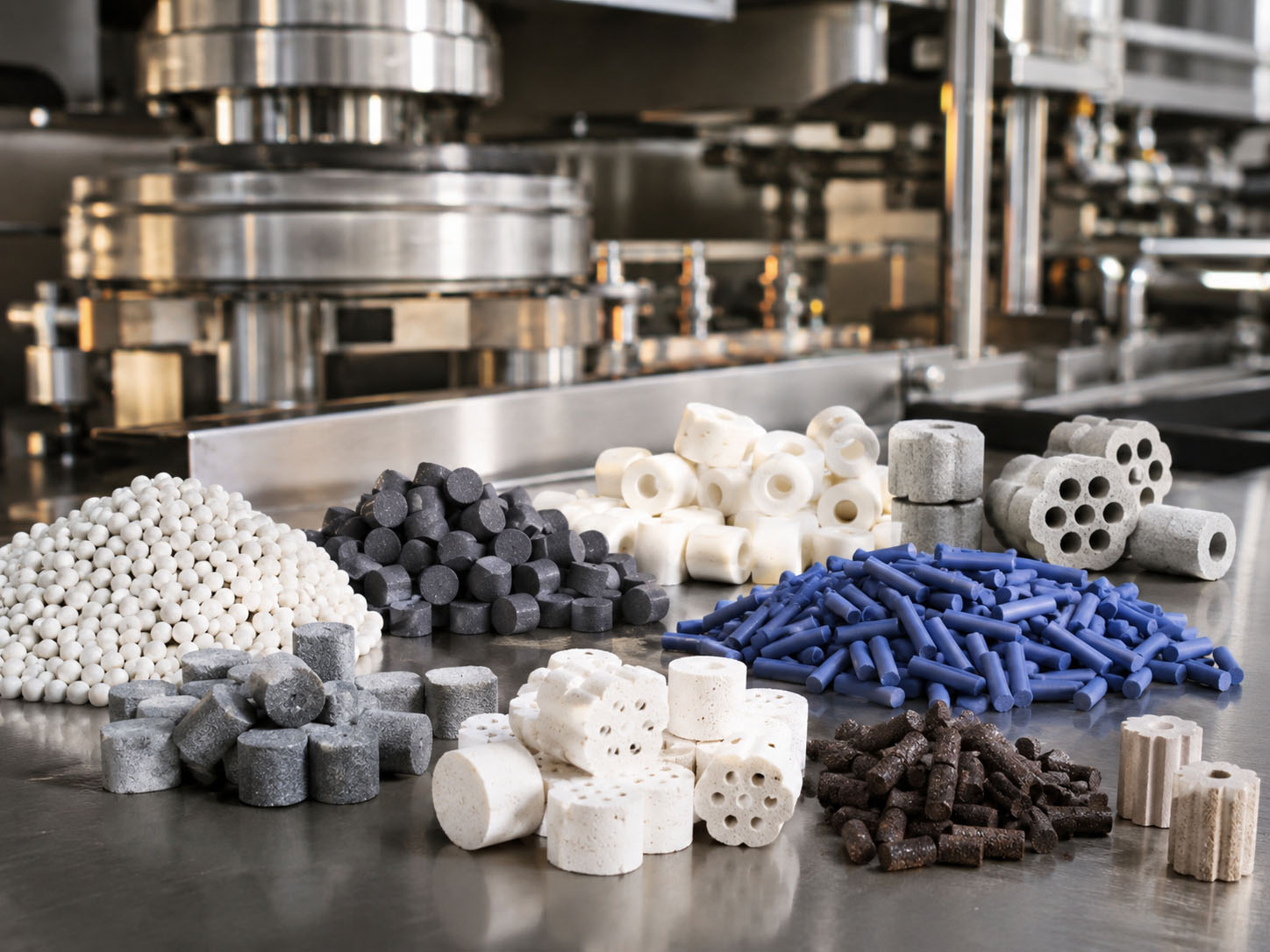
From technical specification and formulation to shaping, thermal treatment, pilot production, repeatability control, activation and industrial readiness.
Reformers are central to syngas and direct-reduction plants. Thermal imbalance, uneven reaction load, carbon formation and tube degradation can directly reduce efficiency and reliability.
Models, process data and engineering knowledge are combined to compare scenarios, predict behavior and accelerate operating decisions.
Mass and energy balances, pressure drop, heat transfer and catalyst behavior under industrial conditions.
Equilibrium, feed consumption, product quality and operating-scenario comparison.
Anomaly detection, performance decline forecasting and early-warning indicators for sensitive processes.
MIDREX reformers, reducing-gas quality, sulfur-removal adsorbents, catalyst loading profile and performance analysis.
Methanol, ammonia, hydrogen, reforming, feed purification and downstream catalytic processes.
Adsorption and purification, catalyst/adsorbent performance, contaminant diagnostics and process optimization.
Endogas generators, methanol cracking, catalyst activation, atmosphere quality and equipment overhaul.